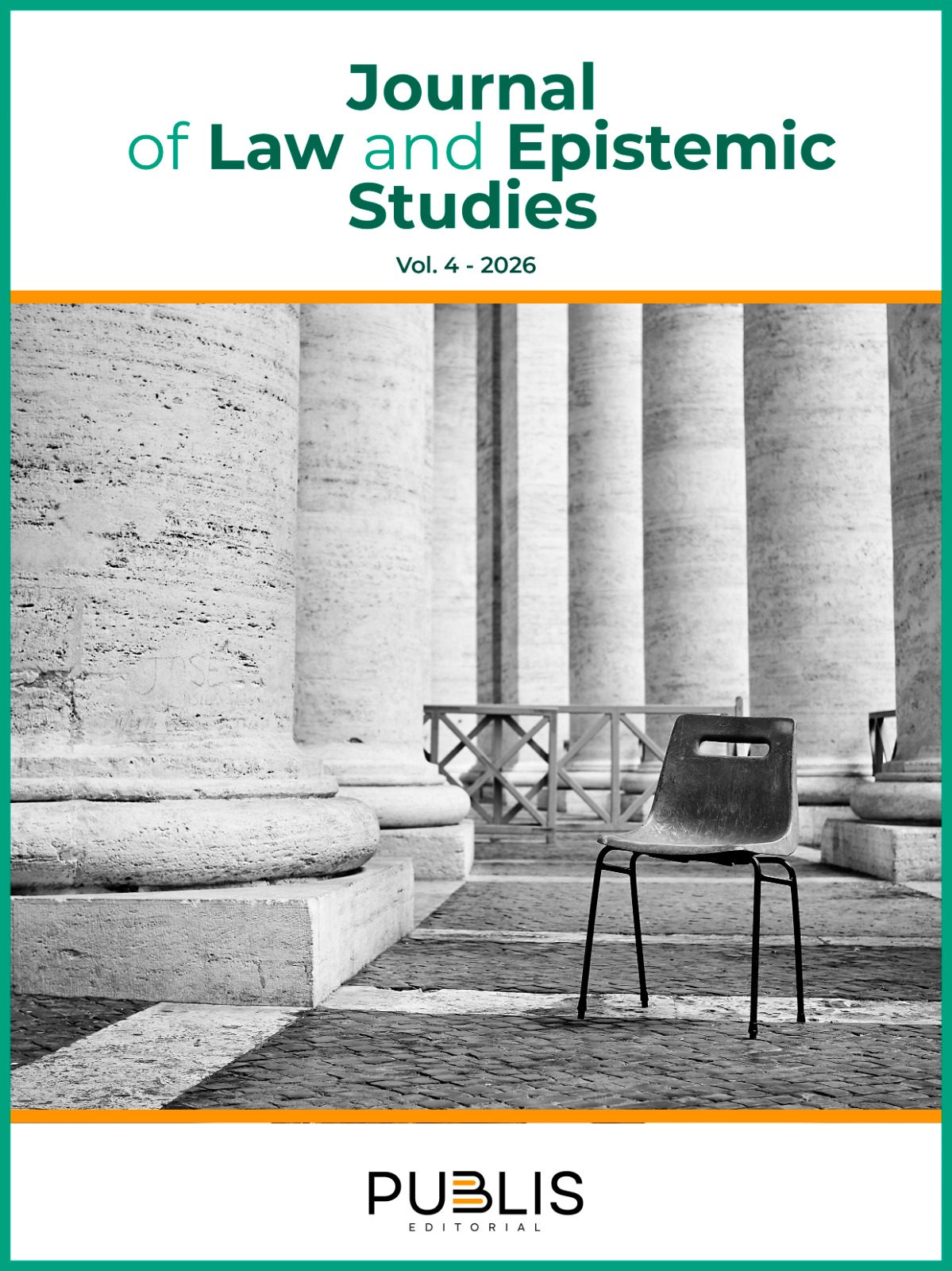
Due process, cognitive bias and artificial intelligence in judicial decision-making
DOI:
https://doi.org/10.5281/zenodo.20059260Keywords:
Artificial intelligence, due process , judicial decision making, cognitive bias, algorithmic transparencyAbstract
This study analyzes the legal and psychological implications of artificial intelligence in judicial decision-making, with particular emphasis on its effects on due process guarantees. The research adopts a qualitative, doctrinal, and comparative approach based on a systematic review of academic literature and international regulatory frameworks related to AI governance and digital justice. From a legal perspective, the findings identify risks associated with algorithmic opacity, automated bias, and the weakening of reasoned judicial decisions, potentially affecting equality before the law, judicial impartiality, and the right to defense. From a psychological perspective, the study highlights the influence of cognitive biases, particularly automation bias and anchoring effects, on judicial actors interacting with AI systems, which may reduce autonomy and critical reasoning. The results also indicate that procedural fairness and public trust in judicial institutions may be undermined when algorithmic processes lack transparency and explainability. In response to these challenges, the study proposes a hybrid model of adjudication in which artificial intelligence functions as a decision-support tool under strict human supervision, ensuring the protection of fundamental rights and the preservation of cognitive integrity in judicial decision-making processes.
Downloads
References
Ayibam, J. N. (2025). Artificial Intelligence in Public Procurement: Legal Frameworks, Ethical Challenges, and Policy Solutions for Transparent and Efficient Governance. Alkebulan: A Journal of West and East African Studies, 5(2), 54-69.
Blount, K. (2026). Toward Equal Access to Justice for All: Harnessing Artificial Intelligence for the Administration of Criminal Justice. In Artificial Intelligence, Governance and Sustainable Development (pp. 185-215). Routledge.
Boonprakong, N. (2025). Quantifying and Understanding the Effects of Cognitive Biases in Human-Computer Interaction.
Braun, T (2025), "Liability for artificial intelligence reasoning technologies – a cognitive autonomy that does not help". Corporate Governance, Vol. ahead-of-print No. ahead-of-print. https://doi.org/10.1108/CG-09-2024-0471
Council of Europe. (2018). European Ethical Charter on the Use of Artificial Intelligence in Judicial Systems and their environment. European Commission for the Efficiency of Justice (CEPEJ). https://rm.coe.int/ethical-charter-en-for-publication-4-december-2018/16808f699c
Fisher, T. (2025). Within the Sound of Silence: Reassessing the Role of Reasoning in Judicial Decision-Making. Cambridge L. Rev., 10, 1.
Heo, W (2025). “Revisiting Algorithmic Bounded Rationality With Potential Solutions: How Recommendation Systems Amplify Cognitive Biases in Consumer Decision-Making.” Journal of Consumer Affairs 59, no. 4: e70032. https://doi.org/10.1111/joca.70032.
Khokhar, M. A., Anees, A., & Gujjar, M. W. (2025). From Judges to Algorithms: The Future of Corporate Adjudication in AI-Driven Courts. The Critical Review of Social Sciences Studies, 3(2), 1794-1811.
Kumar, A. B., Sanjaya, K., & Saleem, M. (2025). Justice in the age of algorithms: Ensuring transparency, accountability, and fairness in AI-driven legal systems. In Artificial Intelligence in Peace, justice, and Strong Institutions (pp. 191-210). IGI Global Scientific Publishing.
Mugamba, E. (2025). Digital Due Process in the Age of Algorithms: Redesigning Fairness in Criminal Justice Decision Systems in Uganda. Available at SSRN 6052435. https://papers.ssrn.com/sol3/papers.cfm?abstract_id=6052435
Neil, R, Zanger-Tishler, M. 2025. Algorithmic Bias in Criminal Risk Assessment: The Consequences of Racial Differences in Arrest as a Measure of Crime. Annual Review of Criminology. 8:97-119. https://doi.org/10.1146/annurev-criminol-022422-125019
Novelli, C., Floridi, L., Larsson, S., Taddeo, M., & Winter, S. L. (2024). The artificial in artificial intelligence: imagination shapes AI regulation. AI and Ethics. https://doi.org/10.1007/s43681-024-00434-4
Published
Data Availability Statement
The datasets used and/or analyzed during the current study are available from the corresponding author on reasonable request.
Issue
Section
License
Copyright (c) 2026 Ariadna Moya- Rodríguez, Yonayka Licea -Suárez (Author)

This work is licensed under a Creative Commons Attribution-NonCommercial-ShareAlike 4.0 International License.